Today marks the conclusion of a 3-part series examining the state of the Kansas state House of Representatives. In previous diaries, I ran through KS House seats 1-40 (start there if you’re just joining us) as well as KS House seats 41-80. In this edition, I’ll examine seats 81-125, which include most of the seats in rural Western Kansas, as well as some in the Wichita area.
KANSAS HOUSE OF REPRESENTATIVES – 125 seats
Current composition: 76 Republicans, 49 Democrats (or about 61%-39%)
HOW TO READ THE COMPETITIVE SEAT LISTINGS:
KS-HR-# <—this is the district’s number
43.5R/27D/28.6U <—this is the voter affiliation breakdown, R is Republican, D is for Democrat, and U is unaffiliated voters. Statewide, as of June 2010, the state’s registration numbers were 43.5% Republican, 27.2% Democrat, and 28.6% Unaffiliated. Also, unless the tenth of a percent is a 4, 5 or 6, I rounded to the nearest full percentage point.
District Map <—-this is the official map from this district from: KSLegislature.org the official state gov’t site.
MAIN SOURCES:
Candidate Guide + District PVIs from Capitol Strategies LLC [pdf]
Guide to every KS House seat’s past voting from OurCampaigns.com
Candidate Fundraising from Ethics.ks.gov
COMPETITIVE SEAT LISTINGS:
KS-HR-81: 47R/22D/30.6U : District Map : (R) Peter DeGraaf was appointed to the seat in early 2008, and won it outright in 2008 after a competitive primary with 55% in the general election. So it’s a seat that can be competitive. Unfortunately, the best Dems could come up with this cycle was 21-year-old Wichita State student Zach Ketteman. Still, Ketteman is at least giving it a go, campaigning hard and scoring several endorsements, and getting fined by the state Ethics Commission for forgetting to include “Paid For By…” on campaign materials (along with several others, btw). Whoops. Well, at least we know he’s sending out campaign materials. Rating: Likely Republican
KS-HR-82: 48.6R/21.4D/29.4U : District Map : (R) Open (retirement of Don Myers) – KS Dem Party Exec. Board member & Dem national committeeman Lee Kinch, an attorney, is running, which is about as solid a recruit as you could land in this suburban Wichita district centered on Derby. Though it is a fairly Republican district, the Republican primary winner faced a three-way primary. Unfortunately for Democrats, the best-funded, most active and most-endorsed Republican candidate, Jim Howell, won. If Howell can retain most of the Republican base, he’ll win. Still, with Goyle leading local Dems, don’t count Kinch out completely. Kinch’s bio. Rating: Lean Republican
KS-HR-83: 53R/25.5D/21U : District Map : (R) In office since 1985, Jo Ann Pottorff was the only Wichita Republican to vote for the state’s temporary sales tax increase, which garnered her her first primary challenge in recent memory. She barely defeated college grad Kyle Amos 53-47, which could mean trouble: there’s a Libertarian on the ballot, which could draw conservative votes from Pottorff. Her general election opponent is Sean Amore, a 34-year-old with a wife and young daughter, who is a Green Biz Wichita Executive Committee member, part of the United Way’s Young Leaders Association, and one of the “40 Under 40” according to the Wichita Business Journal. Still, the moderate Pottorff hasn’t won a general election with less than two-thirds of the vote in this heavily Republican district many, many cycles, so Amore faces a tough task. Rating: Likely Republican
KS-HR-87: 38.2R/31.5D/29.8U : District Map (D) Open (Raj Goyle) – Boeing Military Aviation Supervisor Om Chauhan, the Democrat, faces off against “self-proclaimed Todd Tiahrt conservative” Joseph Scapa in this rapidly blueing district. And fortunately for Chauhan, the locals are already used to a state Rep. with a kinda-funny furriner name thanks to Goyle. Chauhan’s actively campaigning and has a fairly snazzy website. Rating: Lean Democrat
Nice lady-mullet, Brenda. Flowbie or John Deere?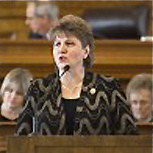
KS-HR-91: 42R/31D/26.4U : District Map : (R) Brenda Landwehr – Health Committee Chair Landwehr has held this gradually-blueing seat since 1994, but she’ll face a stiff challenge from West Point grad Dan Manning, who has a fairly nice-looking website (http://manningforkansas.com/) and appears to be campaigning pretty hard. The seat leans Republican only slightly, and the hard-right Landwehr had somewhat close calls in 2002 (54.5%) and 2006 (52.9%) though she nabbed 61.6% in 2008 and 64% in 2004. In other words, non-presidential-year elections are her toughies, and with a solid opponent, this might be the off-year she finally goes down. Rating: Lean Republican 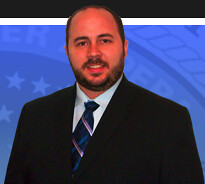 UPDATE: I missed a little factoid in Manning’s bio: he’s trying to become the state’s first openly-gay legislator. Sweetheart that she is, this led Landwehr to stir up homophobia among local Republicans, which got Manning a death threat taped to the door of his home. That’s pretty unprecedented in KS politics, especially for just one of 125 seats in the lower house of the legislature. It will also make a lot of local moderates think twice about voting for Landwehr, and if Manning can use his newfound notoriety to attract donations and run a strong campaign, he stands a darn good shot at winning. Ahem, looking at you, JoeMyGod. Come on Joe, he’s basically a ready-made bear icon and if you ask your readers for donations, you should know their money can go really far in Kansas. Full disclosure: I’ve now contributed $75 and counting to Manning’s campaign, the only KS candidate I’ve given to this cycle (well, him and Sean Tevis). Won’t you join me? Otherwise, I’m unaffiliated with his campaign…or any of these campaigns.
KS-HR-96: 34.5R/31D/33.7U : District Map : (R) Phil Hermanson – Democrat Brandon Whipple has raised about $20k, enough for a state rep. race, certainly. His opponent, Republican Phil Hermanson, is a first-termer who got 50.2% of the vote to defeat freshman Democrat Terry McLachlan, who’d won his seat with just 50.3% of the vote in 2006. Thankfully for Dems, Hermanson is a notoriously lazy campaigner, while Whipple’s a young, go-getting teacher and a Wichita State grad, his website is appropriately good (www.whippleforkansas.com) and he definitely seems to be campaigning hard. The picture of him & Sebelius on his website doesn’t hurt, either. Rating: Tossup
 KS-HR-97: 33.5R/32D/34U : District Map : (R–>D) Dale Swenson – First elected in 1994, Dale Swenson made some headlines when he switched parties shortly after being re-elected as a Republican in 2008. Though his district has become quite blue, the moderate Swenson won handily in his previous races (61.4% in ’08 and 64.5% in ’06) so it’s not terribly clear to me why he switched…unless he wants to run for the state Senate (which he did, in a Republican special election in 2003, but lost) as a Democrat. If he runs for the Senate, he might be up against Dick Kelsey (who may retire, he dropped out of the KS-04 race this year, despite being the favorite) in Senate District 26. But first, Swenson has to win in 2010 as a Democrat. In the general election, he’ll face retired consultant and “perennial candidate”/Some Dude Leslie Osterman, who, interestingly, actually ran for the seat in 2000–against Swenson–as a Democrat…and lost badly (66-34). Frankly, based on this Wichita Independent Business Association survey, Osterman doesn’t seem too bright. Rating: Likely Democrat
KS-HR-101: 46R/24.4D/29U : District Map : (R) Joe Seiwert – Freshman Seiwert knocked off incumbent Democrat Mark Treaster 51-49 in 2008, while Treaster had defeated the previous Republican incumbent in ’04 with a similar percentage. Seiwert’s 2010 opponent, Democrat Curtis “Curt” Miller, is the mayor of Pretty Prairie. Unfortunately, Pretty Prairie, a suburb/exurb of Hutchinson, has well under 1000 people. Still, that’s a good profile for this exurban-Hutchinson Reno County district. Libertarian Thad Bartley is also running, which could draw votes from Seiwert. Rating: Tossup
KS-HR-105: 48R/23D/28.5U : District Map : (R/Open) Gene Suellentrop – The owner of a Gambino’s Pizza is up against dietician Jane Byrnes, who did respectably well in 2006 (not 2008, as it says on the Capitol Strategies pdf), winning 40% of the vote against previous incumbent Jason Watkins, who left the seat in 2009, leading to Suellentrop’s appointment. Still, Suellentrop’s never faced voters and the suburban/exurban parts of Wichita (like this district) can be swingy. Byrnes, a Catholic grandmother of six, also scores well for civic involvement, having launched the Westlink Neighborhood Association and served on various local committees. Plus, she has the best-named website of any candidate: http://campaignjane.com/ Rating: Lean Republican
KS-HR-108: 51.6R/21.5D/26U : District Map : (D/Open) Don Svaty – Don was appointed to this seat by local Democrats after his son, Josh Svaty, resigned midway through his fourth term to become KS Secretary of Agriculture (a pretty important post in KS, as you might imagine). Don, like his son, has hewed to a pretty Blue Dog-ish line, taking very pro-life and pro-gun lines. Josh held the seat extremely well, defeating an incumbent in 2002 with 66%, getting 60% in 2004, unchallenged in ’06, and taking 63.2% in 2008. Can his Pops do the same? Uh…maybe. He’s up against a very strong candidate in Steven Johnson, a local boy who was Saline South High valedictorian (1984), Student Body President at Kansas State (1988), got an MBA from the Univ. of Chicago, and served on the investment committee of K-State & the 4-H and farms locally in addition to serving as a Sr. VP for a distribution company. Rating: Tossup
 KS-HR-112: 53.6R/20.4D/25.6U : District Map : (R) William Wolf is running for his third term, after winning his first and second with 50.3% and 53% of the vote, respectively. He faces a competitive opponent in the form of the comely young Christina Stein, a social worker, substitute teacher, and contributor to the Kansas Free Press. While she’s from Michigan, she points out that she’s from a much smaller town than the one she wants to represent (Great Bend is the main city in the district). Even better, there’s a picture of her as a teenager with a dead deer she shot on her FAQ page. Her slogan: Christina Stein, Gun-Totin’ Democrat. Hot. Rating: Lean Republican
KS-HR-116: 58R/20.5D/21U : District Map : (D) Patrick “Pat” Maloney – Maloney was appointed to succeed Dennis McKinney upon his becoming state treasurer and has yet to face voters. The only credible comparison for this district is McKinney’s 2002 victory, wherein he beat Republican M.T. Liggett 76-24. Other than that, McKinney went uncontested in ’04, ’06 and ’08. Patrick Maloney is not so lucky–he’ll face Kyle Hoffman, a farmer and owner of Central Fuel & Service in Coldwater, KS. Hoffman is also the elected chair and 13-year member of the Comanche County Conservation District. McKinney, btw, will be on the ballot in 2010–running for a full term as State Treasurer, which could help Maloney, especially as they have separate bases–McKinney in Greensburg (Kiowa Co.) and Maloney in Kingman (Kingman Co.) while Hoffman, presumably, would do well in Comanche, with Barber in the middle as the swinger. Rating: Tossup
KS-HR-119: 40R/26D/33U : District Map : (R) Pat George – There’s a slight chance that challenger Rebecca Escalante will improve enough upon her previous performance that it won’t be an embarrassing 76-24 loss. This district has turned rapidly red–Democrat Ethel Peterson won it in 2002 with 55%, though George defeated her replacement by a whopping 68-32. I mostly just like Escalante’s name, though local voters (turned xenophobic by an influx of Latinos) probably don’t. Rating: Safe Republican
KS-HR-120: 66R/16D/17U : District Map : (R/Open) It would be insane if Democrat Robert Strevey actually won, after having run every year since 2002 against Republican John Faber (who was first elected in 1996). Of course, this year, retired principal Strevey won’t be facing Faber, he’ll face newcomer Ward Cassidy, a retired teacher from St. Francis who won the primary 56-44. If Strevey wins, he is the new Walt Minnick. However, against a relative unknown like Cassidy, Strevey could have a chance, since folks will obviously recognize his name on the ballot more than Cassidy’s. Rating: Likely Republican
2010 OVERALL RACE RATINGS:
Uncontested Democrats: 05, 08, 32, 33, 34, 37, 44, 46, 58, 63, 78, 89, 102, 103, 111 (total: 15)
Safe Dem: 01, 02, 03, 31, 35, 36, 53, 55, 56, 57, 66, 84, 86, 88, 92, 95, 98 (total: 17)
Likely Dem: 23, 24, 40, 62, 80, 97 (total: 6)
Lean Dem: 04, 10, 18, 22, 41, 65, 67, 87 (total: 8)
Projected (meaning Lean D and above) Democrat: 46
Tossups: 16, 17, 19, 39, 45, 69, 72, 96, 101, 108, 116 (total: 11)
Uncontested Republicans: 06, 07, 11, 26, 27, 30, 48, 50, 61, 73, 77, 79, 85, 90, 93, 99, 100, 106, 107, 113, 114, 115, 117, 123, 125 (total: 25)
Intraparty only, Republicans: 09, 13, 51, 64, 68, 70, 94, 109, 110, 118, 121, 122, 124 (total: 13)
Safe Republican: 12, 21, 74, 76, 104, 119 (total: 6)
Likely Rep: 15, 28, 29, 42, 47, 52, 59, 60, 71, 81, 83, 120 (total: 12)
Lean Rep: 14, 20, 25, 38, 43, 49, 54. 75, 82, 91, 105, 112 (total: 12)
Projected Republican: 68
Arealmlc’s final prediction: Downballot Democrats will perform surprisingly well since it’s an off-year, taking a lot of the Tossups and a few Lean Republican seats [looking at you, Landwehr]. With only a handful of potential losses (I’d peg Svaty, Palmer & Hawk as most likely D losses, if there are any). Combine that with a plethora of offensive opportunities, and Democrats are poised to make modest, but significant gains.
2009-2010 Legislature: 76 Republicans, 49 Democrats (61%-39%)
2011-2012 Legislature: 69 Republicans, 56 Democrats (55%-45%) (arealmlc’s official projection)
Even more importantly, nearly all of the potential pickups will come against conservative Republicans, not moderates.
BEST & WORST OF THE KANSAS HOUSE RACES, 2010:
Best Names: Shirley Palmer (5th), Keith Mace (49th), Om Chauhan (87th)
Most Kansas-y Named Race: John Grange (R) Vs. Glenda Reynolds (D) (75th)
Best Mustache: Dale Swenson (97th)
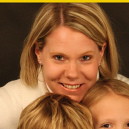
Hottest Female Candidates: Christina Stein (112th) & Shana Althouse (25th)
Hottest Male Candidates: Gerrett Morris (69th) & Jim Faris (47th)
KS Political Hotties Stein, Morris, Faris & Althouse:


Best Websites: Nancy Bauder (41st – www.nancybauder.com), Brandon Whipple (96th – www.whippleforkansas.com) & Shana Althouse (25th – www.shanaalthouse.com)
If I could pick one candidate to automatically lose: [tie] homophobia-spreader Brenda Landwehr (91st) & Connie O’Brien (42nd) the worst state legislator in Kansas.
If I could pick one candidate to automatically win: [tie] Dan Manning (91st) & Christina Stein (112th)
A GUIDE TO CANDIDATES VIA ENDORSEMENTS:
For a complete list of PACs and their relative power in the state, Kansas Watchdog is a good website with a great resource for Kansas PACs ranked by their relative strength.
Kansas Chamber of Commerce – The Kansas Chamber’s gone teabagger. Not only are their endorsements all Republicans (I think, though 1 or 2 Dems may have slipped in there) but they often waded into primaries to boost conservatives over moderates. Their PAC is ranked as 7th most powerful in the state, but this cycle they had few primary victories to show for it–of the 9 Republican sales-tax-increasing incumbents facing KS Chamber-supported opponents, only one lost: Jill Quigley. The other 8, including Spalding, Pottorff, Roth, and Hill, survived an onslaught of mailers from the KS Chamber and from Americans for Prosperity, the Koch Industries-funded group with radical libertarian leanings. Meanwhile, three Republicans sometimes perceived as moderate (including Salina’s Deena Horst and former Speaker Melvin Neufeld) , but who voted against the tax, lost their primaries. Kansas Chamber endorsements.
Greater Kansas City Chamber of Commerce + Life Sciences Fund of Greater KC Chamber – The Greater KC Chamber is much more centrist than its KS-only counterpart. If you support stem cell research, you’ll probably get the endorsement of (and money from) at least the Life Sciences Fund, though both organizations are seemingly big fans of smart science education (ie–anti-creationist). Both are among the state’s 20 most powerful PACs (Life Sciences ranked 6th, Greater KC Chamber 18th). Naturally, being pro-business is the main criteria.
Kansans For Life PAC – The biggest and most powerful anti-abortion group in the state is going to be weak this cycle, quite frankly. They’ve got just 5k in the bank as of July 2010, and rank only 19th among state PACs. If you’re adamantly against abortion, you’ll likely gain the support of this group, which, as you might expect, is much stronger in Republican primary battles than general election ones. They have a few local branches which can have some effect on local races: their Greater Kansas City branch ranks 47th statewide. Kansas for Life PAC site. Get their Primary Endorsements on the Topeka Examiner.
KS-NOW – The most direct opposition to Kansans for Life is probably the local chapter of National Organization for Women: if you’re pro-choice, you can probably score their endorsement. For 2010, they endorsed 45 Democrats and 11 Republicans in contested seats. They probably would’ve endorsed more, but apparently, you actually have to want their endorsement to get it. In some swing seats, it’s a positive, in others it’s a negative. Kansas Free Press lists their endorsements.
Mainstream Coalition (MAINstream PAC) – This is an interesting, very Kansas-y organization. The Mainstream Coalition emerged in the mid-1990s, growing out of a frustration of (mostly) Johnson County moderate Republicans pissed that the moderate Republican representatives kept getting primaried–and losing–and then dealing wacky right-wingers in government embarrassing everyone. While active in primaries, they also get involved in general elections to knock out conservatives with Democrats if they can’t win the primary: Dennis Moore was one of their early endorsees and remained in their good graces throughout his career. Their endorsees are considered social moderates if nothing else (meaning: pro-choice, anti-creationist, pro-gay-ish, pro-sex ed, pro-stem cell research) and notably include both Republicans and Democrats. They now have a PAC that gives directly to candidates (ranked 51st of 175 statewide), but their imprimateur carries significant weight among Johnson County moderates and their stated focus on downballot races makes them especially effective when they endorse state rep candidates. Mainstream Coalition Endorsements
Kansas NEA – The big daddy of pro-education groups in the state, the NEA gives big to Democrats and Republicans, favoring those who are big on education funding. Usually, their endorsement comes with cash as their PAC is among the state’s best-funded. The Kansas Watchdog ranks it as the most powerful PAC in the state. Some related organizations are the KASB (KS Assoc. of School Boards) & USA (United School Administrators) which also have a PAC. KNEA endorsements.
 Loading ...