Off to the 2010 House Races for Team Blue!

In less than 17 months the midterms will be upon us.

In 2006 we fielded candidates in 425 districts and in 2008 candidates in 421.

How will we go in 2010?

Below the fold for all the details and hey go check out the shiny new 2010 Race Tracker Wiki over at Open Congress for all your House, Senate and Gubernatorial needs.

(Cross posted at Daily Kos, MyDD and Open Left)

Well for starters I think we can safely assume that we will field candidates in all 257 of the Districts that we currently hold (does anyone really think that we won’t win in CA-32 in July?).

So onto the Republican held districts:

40 GOP held Districts have confirmed Democratic Party candidates:

AL-03 (Rogers) – R+9,

AR-03 (Boozman) – R+16,

CA-03 (Lundgren) – R+6,

CA-24 (Gallegly) – R+4,

CA-26 (Dreier) – R+3,

CA-44 (Calvert) – R+6,

CA-45 (Bono Mack) – R+3,

CA-48 (Campbell) – R+6,

CA-50 (Bilbray) – R+3,

C0-06 (Coffman) – R+8,

DE-AL (Castle) – D+7,

FL-05 (Brown-Waite) – R+9,

FL-06 (Stearns) – R+10,

FL-07 (Mica) – R+7,

FL-10 (Young) – R+1,

FL-12 (Putnam OPEN) – R+6,

FL-14 (Mack) – R+11,

IL-10 (Kirk) – D+6,

IL-13 (Biggert) – R+1,

IL-18 (Schock) – R+6,

KS-04 (Tiahrt) – R+14,

KY-04 (Davis) – R+14,

KY-05 (Rogers) – R+15,

MD-06 (Bartlett) – R+13,

MN-06 (Bachmann) – R+7,

MI-11 (McCotter) – R+0,

MT-AL (Rehberg) – R+7,

NE-03 (Smith) – R+24,

NV-02 (Heller) – R+5,

NY-23 (McHugh) – R+1,

OH-02 (Schmidt) – R+13,

PA-06 (Gerlach) – D+4,

PA-16 (Pitts) – R+8,

TN-03 (Wamp OPEN) – R+13,

TN-07 (Blackburn) – R+18,

TX-26 (Burgess) – R+13,

SC-02 (Wilson) – R+9,

VA-07 (Cantor) – R+9,

WA-08 (Reichert) – D+3,

WI-01 (Ryan) – R+2,

10 GOP held Districts have Democratic Party candidates that are considering a run:

AK-AL (Young) – R+13,

CA-04 (McClintock) – R+10,

FL-16 (Rooney) – R+5,

LA-02 (Cao) – D+25,

NY-03 (King) – R+4,

OH-14 (LaTourette) – R+3,

PA-15 (Dent) – D+2,

TX-10 (McCaul) – R+10,

TX-32 (Sessions) – R+8,

WI-06 (Petri) – R+4,

4 GOP held Districts have rumoured Democratic Party candidates:

FL-13 (Buchanan) – R+6,

MN-03 (Paulsen) – R+0,

SC-01 (Brown) – R+10,

SC-03 (Barrett OPEN) – R+17,

124 GOP held Districts don’t have any Democratic Party candidates:

AL-01 (Bonner) – R+14,

AL-04 (Aderholt) – R+26,

AL-06 (Bachus) – R+29,

AZ-02 (Franks) – R+13,

AZ-03 (Shadegg) – R+9,

AZ-06 (Flake) – R+15,

CA-02 (Herger) – R+11,

CA-19 (Radanovich) – R+9,

CA-21 (Nunes) – R+13,

CA-22 (McCarthy) – R+16,

CA-25 (McKeon) – R+6,

CA-40 (Royce) – R+8,

CA-41 (Lewis) – R+10,

CA-42 (Miller) – R+10,

CA-46 (Rohrabacher) – R+6,

CA-49 (Issa) – R+10,

CA-52 (Hunter) – R+9,

C0-05 (Lamborn) – R+14,

FL-01 (Miller) – R+21,

FL-04 (Crenshaw) – R+17,

FL-09 (Bilirakis) – R+6,

FL-15 (Posey) – R+6,

FL-18 (Ros-Lehtinen) – R+3,

FL-21 (Diaz-Balart) – R+5,

FL-25 (Diaz-Balart) – R+5,

GA-01 (Kingston) – R+16,

GA-03 (Westmoreland) – R+19,

GA-06 (Price) – R+19,

GA-07 (Linder) – R+16,

GA-09 (Deal OPEN) – R+28,

GA-10 (Broun) – R+15,

GA-11 (Gingrey) – R+20,

ID-02 (Simpson) – R+17,

IL-06 (Roskam) – R+0,

IL-15 (Johnson) – R+6,

IL-16 (Manzullo) – R+2,

IL-19 (Shimkus) – R+9,

IN-03 (Souder) – R+14,

IN-04 (Buyer) – R+14,

IN-05 (Burton) – R+17,

IN-06 (Pence) – R+10,

IA-04 (Latham) – R+0,

IA-05 (King) – R+9,

KS-01 (Moran OPEN) – R+23,

KS-02 (Jenkins) – R+9,

KY-01 (Whitfield) – R+15,

KY-02 (Guthrie) – R+15,

LA-01 (Scalise) – R+24,

LA-04 (Fleming) – R+11,

LA-05 (Alexander) – R+14,

LA-06 (Cassidy) – R+10,

LA-07 (Boustany) – R+14,

MI-02 (Hoekstra OPEN) – R+7,

MI-03 (Ehlers) – R+6,

MI-04 (Camp) – R+3,

MI-06 (Upton) – R+0,

MI-08 (Rogers) – R+2,

MI-10 (Miller) – R+5,

MN-02 (Kline) – R+4,

MS-03 (Harper) – R+15,

MO-02 (Akin) – R+9,

MO-06 (Graves) – R+7,

MO-07 (Blunt OPEN) – R+15,

MO-08 (Emerson) – R+17,

MO-09 (Luetkemeyer) – R+9,

NE-01 (Fortenberry) – R+11,

NE-02 (Terry) – R+6,

NJ-02 (LoBiondo) – D+1,

NJ-04 (Smith) – R+6,

NJ-05 (Garrett) – R+7,

NJ-07 (Lance) – R+3,

NJ-11 (Frelinghuysen) – R+7,

NY-26 (Lee) – R+6,

NC-03 (Jones) – R+16,

NC-05 (Foxx) – R+15,

NC-06 (Coble) – R+18,

NC-09 (Myrick) – R+11,

NC-10 (McHenry) – R+17,

OH-03 (Turner) – R+5,

OH-04 (Jordan) – R+15,

OH-05 (Latta) – R+9,

OH-07 (Austria) – R+7,

OH-08 (Boehner) – R+11,

OH-12 (Tiberi) – D+1,

OK-01 (Sullivan) – R+16,

OK-03 (Lucas) – R+24,

OK-04 (Cole) – R+18,

OK-05 (Fallin OPEN) – R+13,

OR-02 (Walden) – R+10,

PA-05 (Thompson) – R+9,

PA-09 (Shuster) – R+17,

PA-18 (Murphy) – R+6,

PA-19 (Platts) – R+12,

SC-04 (Inglis) – R+15,

TN-01 (Roe) – R+21,

TN-02 (Duncan) – R+16,

TX-01 (Gohmert) – R+21,

TX-02 (Poe) – R+13,

TX-03 (Johnson) – R+14,

TX-04 (Hall) – R+21,

TX-05 (Hensarling) – R+17,

TX-06 (Barton) – R+15,

TX-07 (Culberson) – R+13,

TX-08 (Brady) – R+25,

TX-11 (Conaway) – R+28,

TX-12 (Granger) – R+16,

TX-13 (Thornberry) – R+29,

TX-14 (Paul) – R+18,

TX-19 (Neugebaeur) – R+26,

TX-21 (Smith) – R+14,

TX-22 (Olsen) – R+13,

TX-24 (Marchant) – R+11,

TX-31 (Carter) – R+14,

UT-01 (Bishop) – R+21,

UT-03 (Chaffetz) – R+26,

VA-01 (Wittman) – R+7,

VA-04 (Forbes) – R+4,

VA-06 (Goodlatte) – R+12,

VA-10 (Wolf) – R+2,

WA-04 (Hastings) – R+13,

WA-05 (McMorris Rodgers) – R+7,

WV-02 (Capito) – R+8,

WI-05 (Sensenbrenner) – R+12,

WY-AL (Lummis) – R+20,

So we now have candidate in 297 House Districts, 10 Districts with candidates considering their options and 4 with rumoured candidates.

Whilst in numerical terms we are about where we were at this stage in 2007 we do now hold 20 more districts but we also control the White House (still love saying that).

So at this stage there is no real cause for concern vis a vis candidate recruitment but so much more remains to be done.

On the upside we already have a full slate in 15 states – Arkansas, Connecticut, Delaware, Hawaii, Maine, Maryland, Massachusetts, Montana, Nevada, New Hampshire, New Mexico :), North Dakota, Rhode Island, South Dakota & Vermont.

We also have only 1 district to fill in 7 states – Alaska, Colorado, Idaho, Mississippi, Oregon, West Virginia and Wyoming.  

On the other hand however Texas is a problem for us as it has been for the last two cycles with 19 Districts still to fill. So too do we have far too many vancancies in California and Florida but at least in these 2 states we do already have candidates in a number of Republican districts.

Expect candidates to bob up with increasing frequency from here on in.

Any news, gossip or thoughts in the comments please.

By what margin will Bob Shamansky win?

View Results

Loading ... Loading ...

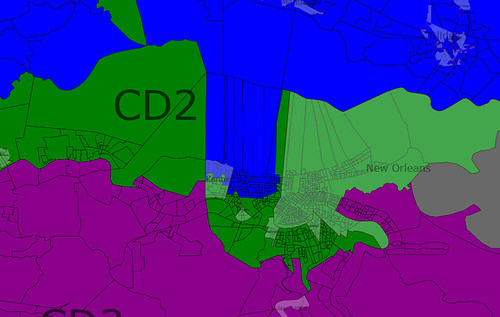
Louisiana Redistricting: Party like it’s 1992!

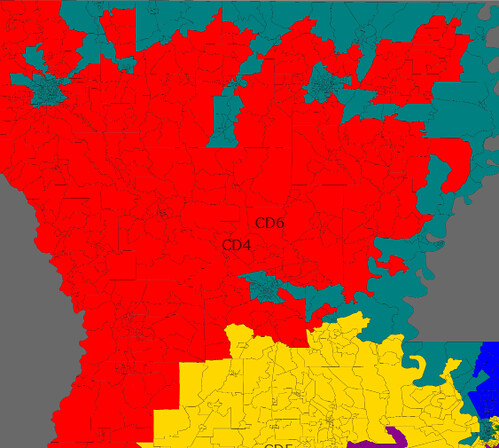
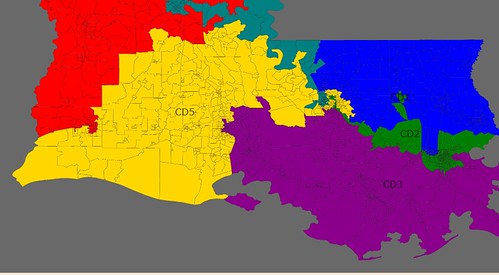
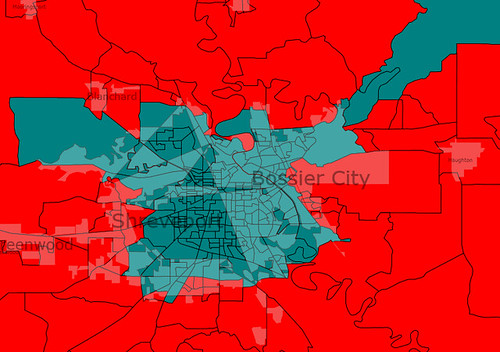
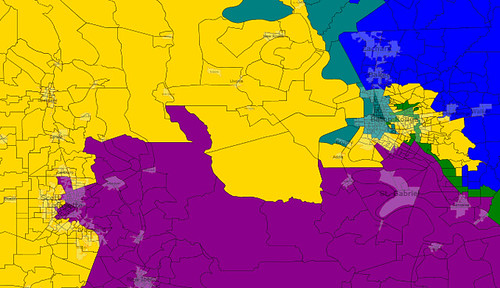
So the images are pretty self-explanatory. I’ve created two minority-majority districts and protected (I think) Charlie Melancon. My working assumption is that we’re at the end of the road for electing white Democrats in the deep south. Of course, the final map will not look like this: I’ve recreated the Cleo Fields’s illegal “Z” district. So what I have in mind is what a Democratic gerrymander might look at. Enjoy….

North Louisiana:

N Louisiana

South Louisiana:

South Louisiana

Shreveport:

Shreveport

Baton Rouge and Lafayette:

Baton Rouge and Lafayette

New Orleans:

NO

MI Prop 2

District 53 Rebekah Warren D 74.25 – 25.75 NO

District 69 Mark Meadows D 62.27 – 37.73 NO

District 27 Ellen Cogen Lipton D 58.82 – 41.18 NO

District 52 Pam Byrnes D 55.64 – 44.36 NO

District 26 Marie Donigan D 54.55 – 45.45 NO

District 67 Joan Bauer D 54.38 – 45.62 NO

District 39 Lisa Brown D 53.41 – 46.59 NO

District 60 Robert Jones D 53.00 – 47.00 NO

District 04 Coleman Young II D 50.94 – 49.06 NO

District 07 Jimmy Womack D 50.16 – 49.84 NO

District 37 Vicki Barnett D 50.03 – 49.97 YES

District 54 Alma W. Smith D 50.27 – 49.72 YES

District 03 Bettie Cook Scott D 50.39 – 49.61 YES

District 06 Fred Durhal, Jr. D 50.88 – 49.22 YES

District 09 Shanelle Jackson D 50.90 – 49.10 YES

District 01 Tim Bledsoe D 51.19 – 48.81 YES

District 11 David Nathan D 52.12 – 47.88 YES

District 12 Rashida Tlaib D 52.87 – 47.13 YES

District 34 Woodrow Stanley D 52.92 – 47.08 YES

District 10 Gabe Leland D 52.95 – 47.05 YES

District 08 Geo. Cushingberry D 53.14 – 46.86 YES

District 05 Bert Johnson D 53.17 – 46.83 YES

District 95 Andy Coulouris D 53.24 – 46.76 YES

District 35 Vincent Gregory D 53.35 – 46.65 YES

District 76 Roy Schmidt D 53.45 – 46.55 YES

District 02 LaMar Lemmons D 54.07 – 45.93 YES

District 29 Tim Melton D 54.43 – 45.57 YES

District 20 Marc Corriveau D 54.57 – 45.53 YES

District 15 Gino Polidori D 55.10 – 44.90 YES

District 67 Barb Byrum 55.86 – 44.14 YES

District 49 Lee Gonzales D 55.99 – 44.01 YES

District 28 Lesia Liss D 56.48 – 43.52 YES

District 14 Ed Clemente D 56.67 – 42.33 YES

District 13 Andrew Kandrevas D 56.71 – 42.29 YES

District 42 Harold Haugh D 56.92 – 43.08 YES

District 75 Robert Dean D 56.92 – 43.08 YES

District 17 Andy Dillon D 57.50 – 42.50 YES

District 18 Richard LeBlanc D 57.71 – 42.29 YES

District 16 Bob Constan D 58.00 – 42.00 YES

District 22 Douglas Geiss D 58.25 – 41.75 YES

District 21 Dian Slavens D 58.26 – 41.74 YES

District 24 Sarah Roberts D 58.42 – 41.58 YeS

District 90 Doug Bennett D 58.58 – 41.42 YES

District 31 Fred Miller D 58.67 – 41.33 YES

District 55 Kathy Angerer D 58.82 – 41.18 YES

District 62 Kate Segal D 58.94 – 41.06 YES

District 101 Dan Scripps D 59.01 – 40.99 YES

District 50 Jim Slezak D 59.49 – 40.51 YES

District 76 Jeff Mayes D 59.96 – 40.04 YES

District 48 Richard Hammel D 60.21 – 39.79 YES

District 109 Steve Lindberg D 60.87 – 39.13 YES

District 23 Deb Kennedy D 60.89 – 39.11 YES

District 25 Jon Switalski D 61.03 – 38.97 YES

District 64 Martin Griffin D 61.81 – 38.19 YES

District 91 Mary Valentine D 61.95 – 38.05 YES

District 32 Jennifer Haase D 62.51 – 37.49 YES

District 65 Mike Simpson D 62.78 – 37.22 YES

District 57 Dudley Spade D 63.14 – 36.86 YES

District 84 Terry Brown D 64.62 – 35.38 YES

District 107 Gary McDowell D 64.65 – 35.35 YES

District 70 Mike Huckleberry D 65.01 – 34.99 YES

District 103 Joel Sheltrown D 65.22 – 34.88 YES

District 56 Kate Ebli D 65.84 – 34.16 YES

District 106 Andy Neumann D 66.89 – 33.11 YES

District 110 Mike Lahti D 68.09 – 31.91 YES

District 108 Judy Nerat D 71.75 – 28.25 YES  

Michigan: A Master Work of Redistricting

Below, in three parts, I am going to display the piece of redistricting that I am most proud of so far, Michigan. I might have settled for less than some people, but I can make a guarantee; I guarantee you that under this map Thadeus McCotter is screwed six ways from Sunday, and that Democrats will have too, reliable, if swingish, western Michigan seats, and that a 10-4 delegation is tough, but fair seeing the direction Michigan has been trending the past two decades.  

To start let me give you a view of northern Michigan, where two districts take up almost 2/3rds of the state’s landmass:

Northern Michigan Congressional Map

(I apologize, on this map version there are no numbers, but in the main view below both are numbered, for references blue is the 1st and green the 2nd, as any familiar with the app will know).

Okay. Northern Michigan was fairly simple, and only small changes. Mainly I cut conservative Antrim County from MI-01 and overall added, to meet population demands, the rest of Bay County, which gives the district a firm Democratic anchor. Now the Up is already a lot more Democratic on a state and local level than a Presidential one so MI-01, though still swingish, is fairly secure for Democrats under this map, not that any Republican could ever beat Bart Stupak. Now I don’t have moral qualms about splitting counties, but it is nice split only one county.

MI-02 is also a nice lesson in compactness and sensibility, as it contains most of rural upstate Michigan and remains fairly conservative, and would be an easy district for Dave Camp to hold, especially with his home county of Midland in it, (I toyed with the idea of making a Midland-Geneese-Saginaw based district). Basically its mostly Republican territory, though not gerrymandered that way. Its very agricultural and rural and would share a common interest in Congress, a well done district in my mind.

Now here is the main part of Michigan:

Main Section of Michigan

My main goal was to give Muskegeon and Grand Rapids a more moderate representative, so combining them together formed a Democratic leaning, but somewhat swingish, (if you don’t use Obama’s stellar Western Michigan numbers), district. Then I merged much of Hoekstra and Upton’s districts and got a new, Ottawa-Allegan-St. Berien based district that is extremely conservative and strongly Republican. Unfortunately its so conservative that the Ottawa County Republican it will elect this year will probably take out the most moderate member of the states Republican delegation, Fred Upton.

My next goal was to make a more reliably Democratic Central Michigan district. We’ve failed time and again to take down Mike Rogers and we already had Schauer. I looked at his district and saw that it contained many rural, solidly conservative areas, plus some conservative, swingish suburban areas and Battle Creek in Calhoun. Battle Creek is only mildly Democratic leaning, even though it is Schauer’s base, and Calhoun is swingish to conservative. So overall it is R+1.5 according to my calcs, and a lot more problematic and tough than it would appear on the surface. So I altered it, somethings just fell into my lap; heavily Democratic Kalamazoo, gerrymandered out of the district in 2002 by the GOP to keep it safe, had to be included because their was no room for it elsewhere. Beyond that it was my decision whether to take in more rural Republican territory, or take in heavily Democratic Lansing. I chose to take in Lansing, along with more conservative and suburban Eaton County in order to make an urban central Michigan district that would be reliably Democratic.

The only nasty district is the new sixth, as you see. Its Mike Rogers new district, and its not very pretty. It takes up most of rural western and central Michigan, plus the city of Jackson and suburban, (and strongly Republican), Livingston county. I went this direction partially because Rogers district was unwinnable with Livingston and its other territory in it, but I didn’t want to cede McCotter and weaken Schauer to take him out so I gave him a conservative Central Michigan seat that will be reliably Republican in the near future.

As you can also see the new 12th was almost completely removed from Wayne county, its now mostly based in Washtenaw, Lenawee and Monroe, but its still very liberal and reliably Democratic, its just not based in the immediate blue collar suburbs of Detroit like it has traditionally been it’s now much larger in area.

As you can see the 7th and the 8th are almost unchanged, a Republican leaning thumb district, and a Flint north-central Michigan district that is very Democratic.

Here’s a close up of Detroit, and keen eyes should see immediately how I screwed McCotter and how desperate I was to make sure he would not get reelected, (assuming he survives this round):

Detroit Close Up

Again, sorry, but this batch was not numbered for some reason, (got erased when I did pasted the picture), but they remain on the main picture if you would like to reference.

Take note of the pink district, that is MI-10, and it is meant for McCotter. I was pretty angry almost with it, lol. I stripped his base Livonia, which despite being fairly Democratic inexplicably votes for him due to his mother’s influence. Then I took out most of the more exurban and conservative Oakland County areas that used to comprise the northern in, and went one step further and took in almost all of Dingell’s current district, putting in totally new and heavily blue collar, strongly Democratic areas like Romulus, Taylor, Dearborn and Westland in a new Wayne county based 10th. Believe me, he’ll be gone in that district, around 65-35 Obama, 70% new, no way to win. And he can’t run with Livonia, that’s in even more Democratic, and majority black, MI-14, the grungy green color.

In fact he might have much more luck running against Gary Peters in MI-09, the bright blue, though it still be very terrible odds, a strong two term incumbent a fairly Democratic leaning and trending Oakland district, and almost completely new to McCotter. So I give him little odds.

My only scruples with the Detroit are are actually MI-09 and MI-11, (bright neon green), Sander Levin and Gary Peters’ districts. MI-11 more so, because the current territory Levin represents is strong Democratic, about 62-38, but eying this new district, (where I tried to make minimal changes), it seems like it couldn’t be too much more than a 56% Obama performance, I dunno, maybe I’m underestimating his performance in southern Macomb as opposed to northern Macomb. And of course politically Peters’ district remains about the same on the spectrum, though with some new territory and a good deal more suburban out Oakland. Republicans still have a very solid roster of candidates and a good deal of local power in Oakland, so I would have liked to give Peters a somewhat more secure district.

The two VRA districts remain so. Both are overwhelmingly Democratic, and I tried to make sure they were both fairly compact, one north Detroit and one south. The north one takes in Livonia out of outer Wayne and part of Oakland in Farmington Hills, but Democratic leaning areas anyway, but much whiter and somewhat more affluent. But the demographics remain: 381,585 black, 280,623 white, 21,205 Asian, and 12,1918 Hispanic. The two aren’t so much north and south as east and west, and the 14th takes in the western side of the city and is slightly less black, but has a much larger Hispanic population; 366,283 black, 258,019 white, 82,863 Hispanic, 15,089 Asian.

So on the whole is a very good map, with mostly compact districts and not to much bad gerrymandering. With drawing this map I’m making two major assumptions, one, that Democrats will take the State Senate, two, that Democrats will hold the governorship. Since both seem slightly more likely than not to me at this early point, (being forced to make a call), I chose to use my Democratic gerrymander and not the much rosier, (for the GOP), compromise map.

I like it. I think its a good map that gives good representation to the various interests in the states delegation and doesn’t split many communities at all. Its 9-5, which I think is imminently fair, since the state is moving towards a more reliably Democratic point. I tend to think, when gerrymandering, in terms of the states overall leanings and whats fair, (the Oregon map was just to see how it would turn out), and not just drawing a bunch of swing districts.

It technically challenges two Republicans, Vernon Ehlers from Grand Rapids, and Thadeus McCotter. It is a possibility that Ehlers could hold his seat if Obama’s performance declines significantly and it turns out the Western Michigan numbers were a one time fluke, but either way it remains swingish, with a definite and reliable Democratic lean in Muskegeon, (don’t know why, it borders Ottawa), and Grand Rapids now a swingish, if not Democratic leaning, City itself. McCotter has no chance of survival unless he is the next Chet Edwards, which I doubt, since he’s really struggled the last two cycles in a much more favorable district and against completely unheralded challengers.

So, lets here, what are your thoughts. Oh, and like I beat on yesterday, (hahaa), PLEASE VOTE IN THE POLL not yelling, just making sure people see it. People finally started yesterday, but I at one point i had like 4 different commenter and not one vote in the poll. Even if you don’t care, please vote. I use it as a sort of counter, a useful tool that I’d like to see on here one day. Its encouraging to feel you have a decent audience and that you’re not talking to 4 or 5 people, which is what it feels like sometimes. So it’d be very greatly appreciated if you’d vote, as a favor to me.

Update: After user comments I made the following adjustments to the Detroit area seats:

detroit map redone

By what margin will Bob Shamansky win?

View Results

Loading ... Loading ...

Redistricting Michigan

This is my attempt at a Michigan Democratic gerrymander. Assuming they can hold the Governors mansion and win back the state senate. I looked up the political data and calculated the results for each district. My map ends up giving Peters and Schauer more Democratic districts. It most likely gets rid of Rogers, Camp, and McCotter and gives the Dems a pickup opportunity in the 2nd in an open seat or against a freshmen Republican that voted 54.6 for Obama.

Image Hosted by ImageShack.us

Image Hosted by ImageShack.us

District 1 – Bart Stupak(D-Menominee)

Stays Pretty much the same picks up Grand Traverse County and loses its area of Bay County

Voted 49.60-48.49 Obama

District 2 – Open/Hoekstra replacement

Loses its Republican areas to the south and picks up Bay County and some of the small counties inbetween

Voted 54.67-43.55 Obama

District 3 – Open/Hoekstra replacement

Loses Grand Rapids and picks up the surronding republican areas

Voted 57.3-40.93 McCain

District 4 – John Dingell(D-Dearborn)

The problem with my map is John Dingell doesnt live in the 4th he lives in the 14th(Conyers). So unless he retires or agrees to move the easiest solution would be to swap areas with the 11th and 14th and have Dingell run against McCotter. With the 11th, 13th, 14th expanding the new 4th takes in little of Wayne County and now takes in Hillsdale County, Lenawee County, more of Wastenaw County and some of Oakland County.

Voted 56.43-41.95 Obama

District 5 – Dale Kildee(D-Flint) vs Mike Rogers(R-Howell)

Loses Saginaw and Bay City to break up the republicans gerrymander and picks up Shiawassee County and Livingston County to balance out heavy democratic Flint

Voted 56.59-41.7 Obama

District 6 – Vern Ehlers(R-Grand Rapids) vs Fred Upton(R-St Joseph)

Switches population centers from Kalamazoo to Grand Rapids to pack republicans into the 3rd. Becomes slighty less Democratic

Voted 52.79-45.58 Obama

District 7 – Mark Schauer(D-Battle Creek)

Loses Hillsdale, Lenawee, and Eaton Counties. Picks up Kalamazoo, Cass, and St Joseph. Becomes slighty more Democratic.

Voted 53.96-44.32 Obama

District 8 – Dave Camp(R-Midland)

Loses Livingston and picks up Eaton and Saginaw to become more Democratic

Voted 58.71-39.71 Obama

District 9 – Gary Peters(D-Bloomfield hills)

Picks up Southfield loses Farmington hills to become more Democratic

Voted 58.38-40.28 Obama

District 10 – Candice Miller(R-Harrison Township)

Miller would no longer live in this district but I assume she wouldnt want to face off against Levin. Becomes slighty more republican.

50.94-47.12 McCain

District 11 – Thaddeus McCotter(R-Livonia)

Picks up Ypsilanti, Romulus, Inkster, and Farmington Hills and loses its republican parts of Oakland County.

Voted 60.44-38.02 Obama

District 12 – Sander Levin(D-Royal Oak)

Loses Southfield and picks up Sterling Heights. Becomes less Democratic

Voted 59.27-38.85 Obama

District 13 – Carolyn Kilpatrick(D-Detroit)

Stays the same but had to expand picks up some areas to the south

51.8% Black

District 14 – John Conyers(D-Detroit)

Picks up the rest of Dearborn and Taylor

52.2% Black

Redistricting Texas, y’all!

Ok, so I decided to take on Texas. My mindset for this map was that Republicans would be controlling it, but they would be exercising rationality, realizing their time of statewide domination may be nearing a close, and that throwing Democrats a few bones now is much better than throwing Democrats the entire map later in the decade. If you don’t think Republicans will wake up and smell the coffee and just gun for a dummymander, get your grain of salt ready now.

Of course, a special thanks goes out to Dave and his amazing Redistricting App for making this all possible.

North Texas:

South Texas:

Zoom-ins

Dallas-Fort Worth:

Houston:

San Antonio/Austin:

Photobucket

In detail:

Texas’s 1st Congressional District (Medium Blue)

-Tyler, Longview, Lufkin

67% White, 17% Black, 14% Hispanic

Texas’s 2nd Congressional District (Dark Green)

-Beaumont, Port Arthur, La Porte

64% White, 17% Black, 16% Hispanic

—Picks up Chambers & east Galveston Counties, along with some of the Whiter parts of the old TX-22’s portion of Harris County, while ceding part of the Spring area to the new TX-34

Texas’s 3rd Congressional District (Purple)

-Most of Plano, McKinney, Allen

65% White, 15% Hispanic, 10% Asian

—This area has grown ridiculously and is rapidly Dem-trending. It does shed some of south Collins County to shore up the TX-32, but staves off the coming demographic disaster by dropping the Garland area as well. To help compensate, it picks up some of exburban Collins County from the TX-4.

Texas’s 4th Congressional District (Red)

-Sherman, Texarkana, Paris

75% White, 11% Hispanic, 11% Black

Texas’s 5th Congressional District (School Bus Yellow)

-West Dallas, most of Mesquite, Most of Garland

57% White, 24% Hispanic, 13% Black

—This picks up most of the Garland area, and while that helps boosts the minority population significantly, it should be more than compensated by the uber-conservative rural population (though it drops some of that as well).

Texas’s 6th Congressional District (Teal)

-College Station, Huntsville, Corsicana

66% White, 18% Hispanic, 14% Black

—I ended up pulling this completely out of Tarrant County, making this an entirely exburban/rural district, which makes it more conservative and helps facilitate the creation of a new conservative-leaning district in south Tarrant County.

Texas’s 7th Congressional District (Light Grey)

-West Houston, Bellaire

58% White, 27% Hispanic

—Picks up some of the Katy area while dropping some Hispanic-majority blocks. The long-term prognosis for keeping this district Republican still isn’t fantastic, but it’s that much better than it was.  

Texas’s 8th Congressional District (Steel Blue)

-The Woodlands, Conroe

75% White, 15% Hispanic

Texas’s 9th Congressional District (Cyan)

-Southwest Houston, part of Missouri City

36% Black, 35% Hispanic, 15% White, 12% Asian

—Keeping this plurality African-American was not fun (though admittedly it would have been easier if I weren’t trying to keep Hispanics out of the TX-7). What are the odds this ratio holds out until 2020? Is there precedent for congressional districts transitioning from one protected group until the other?

Texas’s 10th Congressional District (Rose)

-Part of Austin, Pflugerville, Gonzales

64% White, 23% Hispanic

—Pulling out of Harris County doesn’t really help Michael McCaul, but dropping some heavily-Hispanic parts of Austin and picking up several heavily-Republican rural counties and the more conservative parts of the old TX-21’s section of Travis County, so this should be a net-gain. The time is coming when the premise of having a Republican-leaning district taking in a large portion of Austin is ridiculous, but this is probably the best bet for holding on in the meantime.

Texas’s 11th Congressional District (Chartreuse)

-Midland, Odessa, San Angelo

60% White, 35% Hispanic

—With Charlie Stenholm long gone, I went ahead and smoothed out the west Texas districts because none of them are electing a Republican any time remotely soon.

Texas’s 12th Congressional District (Cornflower Blue)

-West Fort Worth, Haltom City

60% White, 29% Hispanic

—Takes in a little more of inner-city Fort Worth, but Granger is (relatively speaking) fairly moderate so it should be a non-issue.

Texas’s 13th Congressional District (Coral Pink)

-Amarillo, Wichita Falls, Pampa

65% White, 26% Hispanic

Texas’s 14th Congressional District (Olive)

-Victoria, Lake Jackson, Seguin

53% White, 36% Hispanic

—Pulls out of Galveston County and picks up more rural counties in Central Texas that the Rio Grande Valley districts have to drop, which does increase the Hispanic population notably. It doesn’t appear to have a major impact on the Republican performance.

Texas’s 15th Congressional District (Orange)

-McAllen, Harlingen, Edinburg

87% Hispanic, 11% White

—This area has grown a ton, so it officially gets to stop being a strip. Neato.

Texas’s 16th Congressional District (Green)

-El Paso, Socorro

81% Hispanic, 14% White

Texas’s 17th Congressional District (Ultramarine)

-Waco, Kileen, Temple

57% White, 22% Hispanic, 17% Black

—The Democratic performance improves significantly here, as the district picks up part of Williamson County and all of Bell County to take the heat off of John Carter and to provide Joe Barton with an entirely non-Metroplex district. I’d guesstimate that McCain still won this district with about 59%-60%, so it hardly leans Democratic (if anything, Chet Edwards might be in more danger from a Republican who can outperform in Bell and Williamson Counties) but it’s not like the Republicans would be interested in helping Edwards out anyway. Realistic? What are your thoughts?

Texas’s 18th Congressional District (Yellow)

-Central Houston

41% Black, 38% Hispanic, 15% White

—Has to shed several Hispanic areas to the TX-29 District to keep African-Americans in the driver’s seat.

Texas’s 19th Congressional District (June Bud)

-Lubbock, Abilene, Big Spring

62% White, 30% Hispanic

—Again, Charlie Stenholm will be but a memory by 2012, so smoothing out these lines and making this district vaguely more Democratic shouldn’t be an issue.

Texas’s 20th Congressional District (Pink)

-Central San Antonio

72% Hispanic, 20% White

Texas’s 21st Congressional District (Maroon)

-North San Antonio, New Braunfels, Universal City

62% White, 28% Hispanic

—Becomes more San Antonio-based than ever taking in most of Bexar County’s predominately White areas. It drops the Austin area and some of its rural Counties.

Texas’s 22nd Congressional District (Chocolate)

-Sugarland, most of League City, part of Missouri City

56% White, 22% Hispanic, 11% Asian

—This drops its portions of Pasadena, La Porte and most of Pearland while picking up more of Galveston County.  Should be a bit more Republican overall.

Texas’s 23rd Congressional District (Aqua)

-South San Antonio, Del Rio, Pecos

70% Hispanic, 21% White

—The Hispanic population goes up because it now takes in a greater share of South San Antonio along with a few more Hispanic neighborhoods on the east side. Probably still not totally out of reach for Republicans, but it’ll be a little harder than it was. They could make this district more conservative but they’d probably be kinda hesitant given its legal history.

Texas’s 24th Congressional District (Royal Purple)

-Most of Carrollton, Euless, Grapevine,

62% White, 17% Hispanic, 12% Black

—Dropping the Grand Prairie area is a big help to Kenny Marchant, though this district does have to pick up some kinda-competitive areas in north Arlington and central Fort Worth. Still should be conservative enough to hold up through 2020.

Texas’s 25th Congressional District (Salmon Pink)

-Part of Austin, San Marcos

43% White, 42% Hispanic

—Shrinks considerable, mostly to help Michael McCaul. It might actually be plurality Hispanic by 2010, though it would likely still be dominated by liberal Whites, so I don’t know if it would qualify as a protected district.

Texas’s 26th Congressional District (Gray)

-Denton, Frisco, Lewisville

72% White, 16% Hispanic

—Drops central Fort Worth which, along with the new exburban Collins County portion, which makes it much more conservative. Maybe too much so? Should these lines be altered to somehow take the heat off of Pete Sessions? Is that even possible?

Texas’s 27th Congressional District (Spring Green)

-Corpus Christi, Brownsville, Kingsville

71% Hispanic, 25% White

Texas’s 28th Congressional District (Mauve)

-Laredo, Mission, Eagle Pass

91% Hispanic

—Would a 91% Hispanic district even be legal? This really isn’t that gerrymandered; it moves out of its awkward chunk of Bexar County and consolidates the voices in the Central Rio Grande Valley. But still, as one of (the?) least White districts in the nation, would this count as packing even if it makes geographical sense?

Texas’s 29th Congressional District (Tea Green)

-East & North Houston, Galena Park

63% Hispanic, 21% White, 13% Black

—The percentage of the population which is Hispanic actually drops somewhat in part because of the new TX-33 to the immediate South which takes the old TX-29’s portions of north Pasadena and east Houston, but Hispanics are still the decisive majority.

Texas’s 30th Congressional District (Carnation Pink)

-South Dallas, DeSoto

44% Black, 37% Hispanic, 17% White

—This district had actually slipped to plurality Hispanic as of 2007, so give that I was creating a new Hispanic-protected district next door, the goal here was to make this district plurality African-American again.

Texas’s 31st Congressional District (Cream)

-Round Rock, Copperas Cove, Cleburne

72% White, 18% Hispanic

— The Austin suburbs are looking fairly purple, and it looks pretty plausible that Williamson County will follow the tradition of other suburban areas of “creative class” cities like Clackamas and Washington Counties outside Portland and eastern King County outside Seattle and turn a nice shade of blue as the young, well-educated city dwellers begin to “grow up” and move to suburbs, yet still maintain a lot of their liberal values. The current TX-31 is holding up better than some other Texas districts right now, but I think, if left in the same basic iteration, it would probably be the 2nd or 3rd district to slip out of Republican hands in the next decade after the current TX-32 and maybe the current TX-10. So, in short, this picked up several rural counties from the old TX-11 and TX-17.

Texas’s 32nd Congressional District (Tangerine)

-North Dallas, part of Irving, Richardson

53% White, 29% Hispanic

—More than any other district, the TX-32 was looking at imminent catastrophe. Demographically speaking, as of 2007, Whites were only about 1% more of the population than Hispanics, and Obama made an impressive 46% showing here. The creation of the new TX-33 District allowed the TX-32 to cede several Hispanic areas in west Dallas, south Irving and Farmer’s Branch, and instead picks up some conservative areas of south Collins County (it was needed to shrink in population somewhat anyway).  This district will probably still be competitive by the end of the next decade, but that’s better than leaning Democratic, which is would be with the current format.

Whew, anyone still with me? Ok. Let’s look at my ideas for the 4 new districts

Texas’s 33rd Congressional District (Persian Blue)

-Southeast Houston, part of Pasadena, most of Pearland

52% Hispanic, 28% White, 15% Black

—The idea behind this district is take the pressure off of Houston area Republican congressmembers, pretty much all of whom would be in various states of vulnerability in the next several years unless the Hispanic population in their districts stay static or are reduced. It gets kinda meandering at some points, especially as it goes down to take in its Galveston County portion, which actually for the most part is more African-American than Hispanic, but that helps TX-22.

Texas’s 34th Congressional District (Bright Green)

-Katy, Tomball, Brenham

64% White, 22% Hispanic

—Western Harris County is notorious for its sprawl, and this district should lean pretty strongly Republican, especially with its added rural counties. It should be Republican enough that taking in the Hispanic areas that it does from the 9th shouldn’t be a huge deal.

Texas’s 35th Congressional District (Lavender)

-Part of Dallas, part of Grand Prairie, part of Arlington

58% Hispanic, 22% White, 15% Black

—Even if Republicans aren’t as rational as the previous districts would suggest, they’d have to be stunningly foolish and short sided to not put up a Hispanic-majority district in the Dallas area. I’d be surprised if the Justice Department doesn’t order at least one new Hispanic-majority district anyway, and this would be the best place to put it. Anyway, this district vaguely resembles Martin Frost’s old district, taking in part of Arlington and Fort Worth, crossing over into Grand Prairie, west Dallas, south Irving, and then up to Farmer’s Branch and a shameful sliver of north Dallas. Frankly, this district is a little gross, but it takes Pete Sessions, Kenny Marchant, and Eddie Bernice Johnson (or, as far as what Republicans will actually care about, their asses if they don’t protect the African-America community of south and downtown Dallas) out of hot water, so there you go.

Texas’s 36th Congressional District (Gold)

-Part of Fort Worth, part of Arlington, Mansfield

58% White, 23% Hispanic, 13% Black

—Takes in south Fort Worth, south Arlington, a sorta awkward part of southwestern Dallas County, and in to most of rapidly growing Johnson and Ellis Counties. Should lean pretty strongly Republican, though maybe not as strongly as I’d like.

So there you go. Comments? Remember, this map, while certainly favorable to Republicans, assumes some rationality, and that they recognize that throwing us a few bones now will present  a world of hurt later, but do you think they’ll be dumb enough to shoot for a dummymander? Assume that Pete Sessions has his finger on the pulse of the Hispanic voice and that when Democrats in Austin move to the suburbs they’ll instantly become flat-out neo-con Texas-secessionists? And what might a compromise map look like if we do manage to pick up the Texas House or Texas Governor?

SSP Daily Digest: 6/12

MO-Sen: I’m not sure if Roy Blunt’s task just got easier or harder. Tom Schweich, a law professor and former ambassador, who started exploring the Missouri Senate race and landed some surprisingly hard blows on Blunt, yesterday decided not to run and instead endorsed Blunt. Schweich was a friend of moderate ex-Sen. John Danforth and was understood to be something of a Danforth proxy in the race. So Blunt should be happy to be free of that challenge, right? No, because he’s still likely to face a challenge from former Treasurer Sarah Steelman, who hasn’t formally announced her candidacy but has been stepping up her attacks on Blunt as an unprincipled insider. Without Schweich in there splitting the outsider anti-Blunt vote, Steelman becomes more viable.

FL-Sen: Here’s an endorsement from a key player for Rep. Kendrick Meek: he was endorsed by Miami mayor Manny Diaz, who’s recently been associated with possibly running in FL-25 or for Lt. Gov. next year. Another interesting Meek tidbit that just came out: Meek has gotten more tobacco industry money than anyone else in the 2010 election cycle (more than, say, Jim Bunning or Richard Burr). Meek has close ties with the Tampa-based cigarmaking industry.

OH-Gov: What’s that? An endorsement from a puny mortal like Manny Diaz? Screw that, because John Kasich just got an endorsement from Chuck Norris. (Which is odd, because I thought the fact was that Chuck Norris didn’t endorse politicians; politicians endorse Chuck Norris.) Ted Strickland was reportedly last seen running in terror on the shoulder of I-70, trying to get out of Ohio before sunset.

CA-03: A second credible Dem has gotten into the race against the newly-vulnerable Rep. Dan Lungren in this R+6 district in the Sacramento suburbs. Bill Slaton, director of the Sacramento Municipal Utility District (and overseer of the electrial grid for 1.5 million people), filed to enter the race, joining confusingly-named fellow Dem (and Elk Grove city councilor) Gary Davis.

CT-04: The GOP has landed an interesting challenger to go against freshman Rep. Jim Himes: 24-year-old Will Gregory, a “young, fiscally conservative, socially moderate Republican” activist who applied for a White House job during the Bush administration and, when asked to name two administration policies he agreed with, couldn’t provide an answer. State Senate minority leader John McKinney also seems likely to get in the race for the GOP and would bring a bit more, um, gravitas.

NY-29: Tom Reed, the mayor of Corning, New York, announced that he won’t run for a second turn but that he was looking at another public service opportunity that he couldn’t be specific about, but that sounded suspiciously like running in the 29th against freshman Rep. Eric Massa.

FL-Ag. Comm.: Ordinarily even we at SSP wouldn’t get so far down into the weeds as to post results of a poll of the GOP primary for the Florida Agriculture Commission race, but the results are too unbelievable to pass up… unbelievably funny, that is. The idea that the guy who used to be #3 on the House leadership ladder would try to demote himself to Florida Agriculture Commissioner is odd enough, but Rep. Adam Putnam is trailing a state Senator, Carey Baker, 26-17, in that race.

NY-St. Senate: As everyone sits and waits to see whether state Senator Hiram Monserrate should stay or go (he’s vacillating on his coup participation, meaning the whole thing turns on him now), two interesting new developments. One is that the coup may lead to ouster of Dem leader Malcolm Smith and his replacement with John Sampson, who apparently has a better relationship with the dissidents. Also, there’s buzz (though nothing confirmed) that Barack Obama himself has been on the phone with not just Monserrate and Pedro Espada, trying to get them back into the fold, but also with Darrel Aubertine (although it’s unclear whether Obama would encourage Aubertine to stay in the Senate as the Dems try to get their narrow edge back or to get into the NY-23 race that Obama opened up for him by promoting John McHugh).

GE 2008, the Democratic pick up states: an exhaustive summary analysis

Now that all 9 Democratic pick-up states plus NE-02 have been analysed, I have also provided an exhaustive and most unique non-partisan summary of the pick-up states. I can guarantee you that there is information in this summary that you will not find anywhere else in this quality, clarity or combination.

There are a number of side-documents that go with the summary, plus links to all of the nine analyses and the GE 2008 final analysis for the entire Union.

I want to explain again that I have farmed this kind of thing out to Google Docs as it makes it easier for me to publish charts, tables and graphics. It is my hope that you will read the summary in it’s entirety. There are surprises all over the place that only become apparent when one scratches under the surface and researches the GE 2008 at the county level, county for county. In the case of the 9.25 pick-ups, we are talking about 696 counties.

The summary is divided into 2 parts and all of this information is after the jump.

Part I of the summary contains:

– links for the individual analyses for all the pick-up states plus the links for the GE 2008 analysis for the entire Union are given again. They will be reproduced at the bottom of this diary entry.

– an overview of the raw vote and percentage totals for the pick-ups states, first for 2008 only and then a comparison to 2004.

– three maps. One shows the geographic position of the pick-ups within the USA. The second shows the geographical relationship between the pick-ups and the Democratic retentions from 2004. The third shows the Democratic states from 2008 plus the 5 leanest GOP wins from 2008.

– a question: “How does this compare on a historical level?”

The question is referring to the number of electoral votes that changed parties in 2008, namely, 113 EV. I then provide a table showing each general election back to 1948 and how many electors changed parties, and in which direction. The answer to the question is that Obama’s EC shift is on par with the last election cycle, but less than in the 1980s.

Afterward, there is an introduction to the county-level analysis, including an exact numeric count of counties per state: Democratic retentions, Democratic pick-ups, Republican retentions and Republican pick-ups.

Quote:

“In the pick-up states, the Democratic party retained 146 of 148 Democratic counties from 2004 and then picked-up an additional 89 counties, for a total of 235 counties (33.76%). The Republican party lost 89 counties from 2004, retaining 459 counties and then picked-up 2 counties, for a total of 461 (66.24%). 235 + 461 = 696 counties.”

“Nationally, all 9 states trended Democratic as Obama won them and their electors according to the WTA (winner-takes-all) system, but when we look at the inner details, the picture is much clearer: 642 of 696 counties in the pick-up states (92.24%) swung Democratic. The remaining 54 counties (7.76%) swing Republican. This indicates a statistical grand sweep for the Democratic party in the pick-up states.

In 4 states, the ENTIRE state trended Democratic: Colorado, New Mexico, Nevada (all three western pick-ups) and Indiana.The pick-up in Indiana is historic not only because this is the first time since 1964 that a Democrat has won the state, but it also had the largest partisan shift of all 50 states in the GE 2008: +21.71%

The state with the largest contra-trend (Republican) against the national trend: Florida.”

Part I ends with maps of Ohio, Virginia and North Carolina, showing the geographic position of the 28 counties that swung Republican, showing their proximity to Appalachia.

You can link to Part I via Google Docs.

Part II starts with an extensive study of the 39 largest counties out of the 9.25 pick-ups states, plus Durham County (NC) as honorable mention.

Quote:

“I have done a statistical analysis of the 39 largest counties of the 9.25 pick-ups. These are all counties that had a total vote of more than 170,000 and at least one candidate should have also gotten at least 100,000 of those votes or very,very close to it. All of those counties meet both criteria. Two counties (Stark County / OH, Washoe County / NV) had no candidate with 100,000 votes or more, but in both cases one candidate was very close to 100,000 and the countwide total vote was well over 170,000.  Those 39 counties accounted for 44.49% of the total popular vote of the pick-up states, which is actually slightly LESS than it was in 2004 for the same states: 44.91%. Nonetheless, when only 39 of 696 analysed counties (5.60%, numerically) have almost half the electoral firepower of the region, then it is statistically very clear that the large urban areas have the real electoral firepower in presidential elections. The candidate who sweeps the urban areas has a far better chance of winning the presidency.

Of these 39 counties, there were 21 Democratic retentions, 8 Democratic pick-ups and 10 Republican retentions. This means that of the same 39 counties in 2004, the picture was much more even: in 2004, there were 21 Democratic counties of these 39 and 18 Republican counties.

The Democratic party picked up Hillsborough (Tampa) and Pinellas (Clearwater) counties in Florida, Wake (Raleigh) county in North Carolina, Washoe (Reno) County in Nevada, Hamilton (Cincinnati) County in Ohio, Jefferson (Golden) and Arahapoe (Littleton) counties in Colorado and Douglas (Omaha) County in Nebraska.”

The important thing about this study is it’s depth and breadth: each of the 39 (40) counties are analysed comparing 2008 to 2004, measuring raw vote and margin differences, also the counties’ percentual take of their respective states’ popular vote and also their take of the pick-up states combined. But the counties are also each given a spreadsheet to trace their voting history back to 1960 and the results are nothing less than amazing!

Next, from the analysis in Part II:

Superlatives:

– the largest raw vote total of all 39 counties: Miami-Dade County, FL: 864,636 votes

– the largest Democratic winning raw vote total: Miami-Dade County, FL: 499,831 votes

– the largest Democratic raw-vote margin of the pick-ups: Cuyahoga County, OH (Cleveland): +258,542 vote margin

– the three highest Democratic winning percentages: Denver- CO,  Boulder, CO and Cuyahoga- OH: 75.45%, 72.29% and 68.70%, respectively.

– the three largest Democratic winning margins (by percent): Denver- CO,  Boulder- CO and Cuyahoga- OH: +52.41%, +46.14% and +38.74%, respectively

– the highest democratic margin-shift (swing): Marion County, IN: +26.40% margin shift. This is especially impressive, as this shift was not from a pick-up, but rather, a Democratic retention county.

– the largest Republican winning raw vote total: Duval County, FL: 210,537 votes

– the largest Republican raw-vote margin of the pick-ups: El Paso County, CO: +51,419 vote margin

– the three highest Republican winning percentages: Butler – OH, El Paso- Co and Lee- FL:  60.52%, 58.69% and 54.67%, respectively

– the three largest Republican winning margins (by percent): Butler – OH, El Paso- CO and Brevard- FL: +22.58%, +18.82% and +10.37%, respectively

– the lowest negative Republican margin-shift (swing): Brevard County, FL: -5.73% margin shift

All of the Democratic retentions and pick-ups showed raw vote, percentual and margin GAINS.

All of the Republican retentions showed percentual and margin LOSSES.

4 of the Republican retentions showed raw-vote gains: Brevard, Lee, Polk and Pasco counties, all in Florida. The other 6 Republican retentions showed raw-vote losses.

9 Republican or Democratic tipping-point (margin = less than 4%) counties from 2004 became solid Democratic wins in 2008: Pinellas, Volusia and Orange Counties-FL, Wake, Guilford and Mecklenburg Counties- NC, Montgomery and Stark Counties – OH, Arapahoe County- CO

5 Republican retentions have become tipping point counties for 2012: Sarasota (+0.10%), Virginia Beach (+0.71%), Duval (+1.90), Seminole (+2.70%) and Pasco (+3.75%) . Statistically this means that 1/2 of the Republican retentions studied here are endangered territory for 2012 and (this has been proven historically many times over) in the case of a sucessful re-election campaign for the Democratic party in 2012, these five counties are the most likely candidates to become Democratic pick-ups in 2012.

O Democratic retentions or pick-ups are tipping-point counties for 2012.

Here is the EXCEL SPREADSHEET that has all of the raw calculations for the 39 (40) largest counties.

In order to simplify the look of the table and make the information easier to see, I created a table to show the chronological progression of each county from 1960 to 2008. For each county and year, I have assigned either a D, R or an I, depending on which party won the county in that year. And then I have shaded each cell according to winning party. I then organized the table in order from CORE GOP counties to CORE DEM counties. Take a good, hard look at the table when you read Part II, it is most enlightening.

You can link to Part II via Google Docs.

Quotes:

“In the case of some counties that visually look as if they should be core GOP counties there is instead the marking steady; these are GOP counties that should be core counties, but which almost flipped in 2008, so their status is now uncertain. And some Democratic counties are marked as steady as the margins are very lean.

But the table makes it very easy to see which years are landslide years: 1972 and 1984, to a smaller extent 1992 and 2008. In 1972, we see a sea of red go through all counties except Lucas County, OH. In 1984, we see a sea of red go through all counties except the bottom 5. At the top we see 3 core GOP counties that also resisted the Johnson landslide of 1964. Notice that all three counties are in Florida.

Starting in 1988, the Democratic party started re-building in the urban areas:

3 counties were added to the Democratic column in 1988, resisting the GOP pull in that year: Boulder, Summit and Lucas counties. And those counties have become core DEM counties since then.

8 counties joined the Democratic column in 1992 and have stayed there since then: Palm Beach, Broward, Volusia, Bernalillo, Franklin, Montgomery, Clark, Miami-Dade. They are mostly strong DEM counties, save for Montgomery and Volusia, which tend to go with leans margins. There are 4 more counties that joined the Democratic column in 1992, but were reclaimed by the GOP in either 1996 or 2000: Pasco, Wake, Stark, Guilford. Pasco returned to the GOP in 2004 and has stayed there. It is therefore the only county to complete buck the blue trend, in spite of reduced margins in 2008.

Mecklenburg and Pinellas counties joined the Democratic column in 1996, were reclaimed by the GOP in 2000 or 2004 and were reclaimed by the Democratic party in 2004 or 2008.

Fairfax joined the Democratic column in 2000 and has stayed there since, with ever increasing margins.

Orange and Marion counties joined in 2004 and were retained in 2008. Both of these retentions had massive margin shifts toward the Democratic party in 2008: +18.41 and +26.40%, respectively.

The 8 counties that Obama picked-up are clear to see in the middle of the table. Six of those counties have one thing in common: this is the first time they have gone Democratic since 1964, statistical evidence of a sweep similar to but not as extreme as Johnson in 1964: Hamilton, Douglas, Jefferson, Wake, Hillsborough and Pinellas counties were slightly smaller wins for the Democratic party than in 1964. However, Washoe and Arapahoe counties were larger wins for the Democratic party than in 1964, thus breaking a 44 year record. Notice that both of those counties are in the west.

We can see clearly from the table that the last time a party had flipped 8 counties or more was in 1992, when Bill Clinton picked-up 12 counties. George W. Bush, Jr. picked up 3 counties in 2000 and 1 more in 2004. Those counties returned to the Democratic party in 2000 or 2004.

In 1988- just analyzing these 40 counties- there were 8 Democratic counties and 32 Republican counties. In 1992, out of the same mix of 40 counties, there were 20 Republican counties and 20 Democratic counties, an even split. In 2000, there were 21 Republican counties and 19 Democratic counties. But in 2004, in spite of a republican re-election, the Democrats had 22 counties, the Republicans 18. And now in 2008, it’s 30 Democratic, 10 Republican. There can be no doubt about it: statistically, the urban areas in the Union have moved decisively to the Democratic party in 47 of 50 states (the evidence for which I will present before the end of 2009). This example from the 9.25 Democratic pick-ups is mild in comparison to the statistical data that came out of cities in core Democratic territory: Philadelphia (83% for Obama), Detroit (74% for Obama), New York (86% for Obama), Los Angeles (69% for Obama), Seattle (70% for Obama), Portland (77% for Obama) Chicago (76% for Obama), Boston (64% for Obama), Honolulu (70% for Obama), Milwaukee (67% for Obama), Madison (73% for Obama), New Orleans (79%), Baton Rouge, Dallas (deep in GOP territory: 57% for Obama), St. Louis (60% for Obama) etc, etc, etc.”

Conclusion:

“The Democratic wins in the pick-up states, as in the retentions, was not the example of the Democratic party barely holding on the to so-called “blue” states plus one “red” state or getting to one vote over 50%. The sweep through the pick-ups is statistically clear. The last time a sweep like this happened in the Republican party, it held the white house for 12 years. On the other hand, Johnson and Nixon had massive sweeps in 1964 and 1972 and in spite of this,the White House switched hands in the following cycles. So, though such a sweep is no forecast for the future, the data tells us quite clearly where the new battle lines will form in these nine states for the 2012 General Election. And both parties will be targeting key counties in key districts in 2010 in order to sway the affected area to their side before 2012 even gets off the ground.”

————————————————————–

Here the links to the individual analyses, with a detailed description afterwards:

Mid-west:

OHIO – Part I, Part II, Part III , raw data / INDIANA – Part I, Part II and Part III, raw data

IOWA – Part I, Part II, Part III, raw data / NEBRASKA CD-02 – raw data

South:

VIRGINIA – Part I, Part II, Part III, raw data / NORTH CAROLINA – Part I, Part II, Part III, raw data  

FLORIDA – Part I, Part II, Part III, raw data

West:  

COLORADO – Part I , Part II , Part III , raw data, special 9-county 48-year voting history study

Supplemental to Colorado: DEMOGRAPHIC and ECONOMIC profile of Colorado (p.4, hispanic population)

NEW MEXICO – Part I, Part II, Part III, raw data, special 12 county 48-year voting history study   Supplemental to Nevada: DEMOGRAPHIC and ECONOMIC profile of New Mexico (p.4, hispanic population)  

NEVADA – Part I, Part II , Part III, raw data, special 6 county 48-year voting history study  

Supplemental to Nevada: DEMOGRAPHIC and ECONOMIC profile of Nevada (p.4, hispanic population)   Quick Census facts on Nevada  

An analysis for NE-02 (which is the „.25″ part of „9.25″) will be published when I have received the complete precinct data for Douglas and (part of) Sarpy counties from election officials who are willing to dig up the data over 48 years for me. But a comparison 2008 to 2004 is already possible and here is the raw-data.

Links to the large analysis for the entire Union

Full analysis Part I

Full analysis Part II  

Full analysis Part III

Full analysis Part IV  

Full analysis Part V

raw-vote total data  

Obama’s standing in the national rankings since 1824  

Obama’s standing in the rankings, per state

Social Networking with the 2009 Democratic Gubernatorial Candidates

{First, a cheap plug for my blog Senate Guru.}

While 2010 will be chock-full of exciting races at all levels of government.  In 2009, though, there will be two marquee races across the country: the gubernatorial races in Virginia and New Jersey.  Republicans are favored in both races, but both races should come down to the wire, and Democrats can hold both seats – with your help.

In Virginia, Democratic State Senator Creigh Deeds won an impressive, come-from-behind victory for the nomination this past Tuesday, demonstrating a strong ground game.  The Republican nominee will be far-right-winger Bob McDonnell.  The best description for McDonnell’s brand of Republicanism is that he is a Pat Robertson disciple.  You can learn more about McDonnell at TheRealBobMcDonnell.com.  Deeds and McDonnell have tangled before, in the 2005 Virginia Attorney General race, where McDonnell barely edged Deeds by 323 votes (yes, just 323 votes – that’s not a typo with zeroes missing) out of over 1.94 million votes counted.  This race will be exceptionally close, so every single dollar contributed and every single hour spent volunteering will make a real difference.  A bit of good news is that the first poll taken after Tuesday’s primary, by Rasmussen Reports, shows Deeds with a 47-41 lead over McDonnell, but this could just be due to a primary bump.  Rasmussen’s last poll showed McDonnell leading Deeds 45-30.  Your support will help Deeds sustain his new lead.

In New Jersey, Democratic incumbent Governor Jon Corzine will square off against Republican former U.S. Attorney Chris Christie.  Christie is very much at home in the Republican Culture of Corruption.  Republican Christie has faced scandals involving no-bid contracts, abuse of the state pension system, pay-to-play, and even allegedly cutting a deal to get his younger brother’s sentence reduced after being implicated for fraudulent trading practices on Wall Street.  Despite Christie’s mountain of scandal, New Jersey’s lagging economy has hurt Governor Corzine’s poll numbers.  Recent polling gives Christie a 7 to 13 point lead over Corzine.  Research 2000, May 25-27: Christie 46, Corzine 39; Rasmussen Reports, June 4: Christie 51, Corzine 38; and, Quinnipiac, June 10: Christie 50, Corzine 40.  In other words, Christie has an edge, but the fundamentals of the race moving forward favor Governor Corzine.  As the economy gradually picks up over the coming months and voters learn more about Christie’s corrupt background, New Jersey’s blue state status will shine through and Governor Corzine should tighten the race back up.  Your support will help Governor Corzine tighten the race up even faster.

Below are the links to how you can connect with the gubernatorial campaigns (and – please – contribute anything you can to these campaigns, and spread the word!).  Republicans are expecting (and expected) to win both of these races.  However, after being upset in the NY-20 special U.S. House election and losing a U.S. Senator to a Party switch, the GOP is reeling.  Losing either (or both!) VA-Gov or/and NJ-Gov would be a major body blow and simply crush Republicans heading into the 2010 calendar year.  If Democrats across the country are able to support these Democratic campaigns, we can flush the conventional wisdom down the toilet and deliver two more embarrassments to the Rush-Newt-Cheney Republican Party and two more losses to the Michael Steele RNC.

Creigh Deeds for
Governor of Virginia
Deeds
Website
Deeds
Facebook
Deeds
Twitter
Deeds
YouTube
Deeds
Blog
Deeds
CONTRIBUTE
Jon Corzine for
Governor of New Jersey
Corzine
Website
Corzine
Facebook
Corzine
Twitter
Corzine
YouTube
Corzine
Blog
Corzine
CONTRIBUTE